
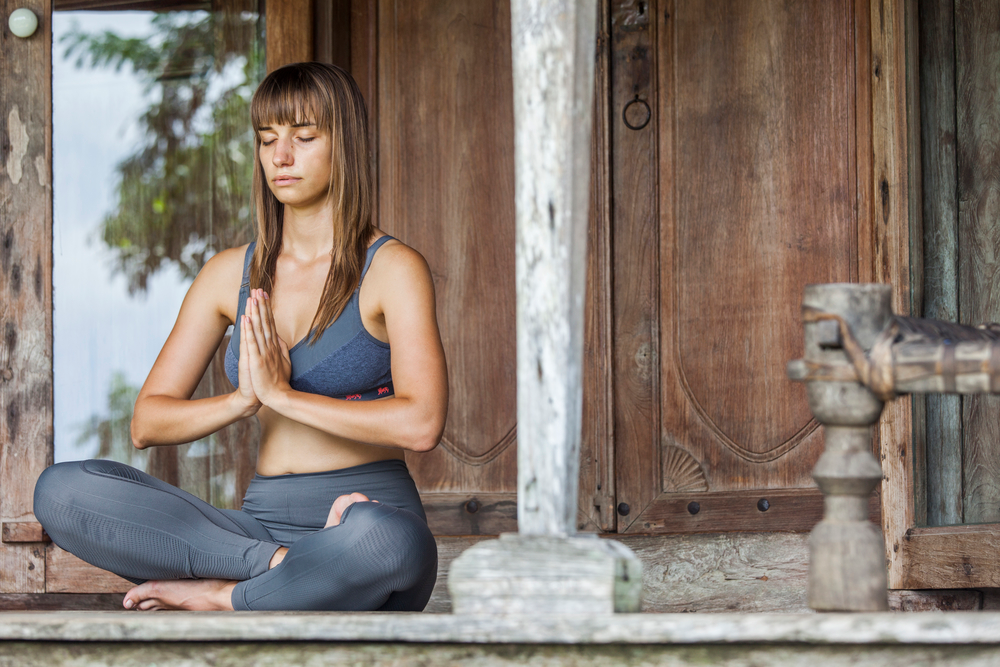
Mind + Body + Spirit = YOU
Why anxiety and trauma recovery need more than one strategy
So, another blog about healing… why not?
I have always been captivated by stories from older traditions where spiritual advisers were also physical healers, counsellors, teachers, guides, and keepers of wisdom. Healing was not divided into neat little categories. The body, mind, emotions, spirit, community, story, and soul were all understood as part of one living system.
In my own meandering way, I think I have made that idea my life’s work.
Not because I believe we need to throw every possible practice at a problem. That can become overwhelming very quickly. But because I have never been able to truly accept the idea that we can heal the whole person by focusing on only one part.
We are not just a thinking mind.
We are not just a physical body.
We are not just a nervous system.
We are not just a soul floating around in search of a good meditation cushion.
We are all of it.
Mind. Body. Spirit.
And this matters deeply when we are talking about anxiety, trauma, depression, heartbreak, burnout, or those strange seasons of life where we simply know we are not living from the truest part of ourselves.
What does holistic really mean?
The word holistic gets used a lot these days. Sometimes beautifully. Sometimes as a kind of wellness confetti thrown over anything vaguely natural.
But to me, holistic simply means whole.
It means we do not reduce ourselves to a symptom, a diagnosis, a thought pattern, a hormone, a chakra, a trauma response, a belief, or a bad week.
It means we remember that everything impacts everything else.
The mind affects the body.
The body affects the mind.
The nervous system affects our emotions.
Our emotions affect our choices.
Our choices affect our relationships.
Our relationships affect our sense of self.
Our sense of meaning affects what we can endure, repair, release, or become.
And our spirit — however we understand that word — gives life its depth, direction, and mystery.
This is why I get a little twitchy around the idea that there is one single thing that will fix all that ails us.
One supplement.
One breathing technique.
One herb.
One mindset shift.
One meditation.
One nervous system hack.
One perfect morning routine.
Now, please do not misunderstand me. I love a good practice. I love a beautiful herb. I love breathwork, journaling, prayer, movement, nature, and well-timed cups of tea. I also love the science of the brain, the wisdom of psychology, and the deep mystery of spiritual life.
But we cannot always self-compassion our way out of everything.
We cannot always think our way out.
We cannot always meditate our way out.
And we certainly cannot always analyse our way out, even though some of us have given that one a very enthusiastic crack.
Sometimes healing requires a different doorway.
Sometimes it asks for the body.
The body is not an afterthought
When we are anxious or traumatised, the body is often where the alarm is ringing.
The mind may be trying to make sense of things, but the body may be bracing, clenching, scanning, tightening, freezing, fleeing, collapsing, or preparing for impact.
This is why physical practices can be such an important part of recovery.
Not because they are magic.
But because the body needs experiences of safety, strength, rhythm, pleasure, grounding, and release.
Sometimes this might be a walk in the sunshine.
Sometimes it might be yoga.
Sometimes it might be swimming in the ocean, floating in a pool, or letting your feet find the earth again.
Sometimes it might be seeing a massage therapist, physiotherapist, bodyworker, or somatic therapist.
Sometimes it might be stretching on the floor, breathing slowly, placing a hand on your heart, or simply noticing that your shoulders have been trying to become earrings all day.
The body needs to know that life is not only threat.
It needs evidence.
Warmth.
Movement.
Touch.
Rest.
Breath.
Light.
Rhythm.
And sometimes, very simply, it needs to be taken outside.
There is something profoundly regulating about sunlight on skin, feet on ground, wind on face, water around the body, or the steady companionship of trees. Not as a cure-all, but as a remembering.
The body remembers danger.
It can also remember safety.
The mind still matters
Of course, the mind matters too.
In fact, mind is one of the great bridges between our inner and outer worlds.
Every thought we have can influence the chemistry of the body. Our thoughts can tighten us, soften us, frighten us, steady us, inspire us, or send us into a spiral faster than a cockatoo with a stolen chip.
This does not mean we should blame ourselves for our thoughts. Not at all.
The mind is not a machine that behaves perfectly just because we have read the right book or done a weekend course.
But we can learn to relate to the mind differently.
We can learn to notice thoughts rather than obey every one of them.
We can learn to question the stories anxiety tells.
We can learn to work with attention, values, imagination, language, and choice.
We can learn to ask:
Is this thought helping me move toward the life I want to live?
Is this old fear speaking?
Is this my deeper wisdom, or my nervous system trying to protect me?
Is there another way to hold this?
This is where psychological work can be so powerful. Not as a way of forcing ourselves to be positive, but as a way of becoming more conscious, more flexible, and less ruled by fear.
The mind can become a tool.
Not a tyrant.
And then there is spirit
For me, the spiritual dimension has always mattered.
Not as an escape from life, and not as a way to bypass pain, but as a way to orient myself within something larger than the immediate storm.
Spirit may mean different things to different people.
For some, it is God.
For some, it is soul.
For some, it is nature, love, creativity, consciousness, the divine, or the quiet sense that life has meaning even when we cannot yet see the full pattern.
However we name it, the spiritual self can help us remember that we are more than our symptoms, more than our fear, more than our history, and more than the roles we have tried to squeeze ourselves into.
Spiritual practice can steady the heart.
It can help us forgive.
It can help us grieve.
It can help us listen.
It can help us find courage when the mind is tired and the body is afraid.
Sometimes the spiritual work is prayer.
Sometimes it is meditation.
Sometimes it is journaling.
Sometimes it is sitting under a tree and telling the truth.
Sometimes it is asking, very quietly:
What is life asking of me now?
What would love do here?
What part of me knows the way forward?
A whole-person approach to anxiety and trauma
When it comes to anxiety and trauma, I believe we sell ourselves short when we look for one cause, one solution, or one neat explanation.
We are far more complex than that.
And I mean that as good news.
Because if one doorway is closed, another may open.
If talking is too much, perhaps the body can begin.
If the body feels too activated, perhaps breath can soften the edge.
If the mind is looping, perhaps values can offer direction.
If emotions are overwhelming, perhaps grounding and gentle movement can help create a little more space.
If life feels meaningless, perhaps the soul needs to be invited back into the conversation.
Healing does not have to be dramatic.
It does not have to be perfect.
It does not have to involve doing everything at once.
A whole-person approach might begin with something very simple:
A walk in the morning light.
A few breaths before answering the phone.
A hand on the heart.
A swim.
A stretch.
A page of honest writing.
A conversation with someone safe.
A moment of prayer.
A decision to stop abandoning yourself in small, daily ways.
These are not small things.
They are how we begin to teach the whole system that another way is possible.
My own path
My own path has wandered through many fields: nursing, herbalism, psychology, spiritual mentorship, meditation, energy work, writing, and the long, humbling apprenticeship of being human.
I still love the old alchemical idea that healing involves transformation at many levels. I love the meeting place between science and mystery. I love the nervous system, and I love the soul. I love research, and I love the strange grace that arrives through symbols, dreams, prayer, nature, and love.
These days, my work is less about offering many separate modalities and more about helping people come back into relationship with the whole of themselves.
Mind.
Body.
Spirit.
Not as a slogan.
As a living reality.
Because anxiety and trauma do not only ask us to think differently.
They ask us to feel safe enough to live differently.
They ask us to listen to the body, soften the mind, strengthen the heart, and reconnect with what is deeply true.
That is the work.
Not fixing one broken part.
Remembering the whole.
#SpiritualPsychology
#MindBodySpirit
#AnxietyRecovery
#TraumaHealing
#HigherLove